Bulgarian PM Questions Ukraine Military Aid Coalition
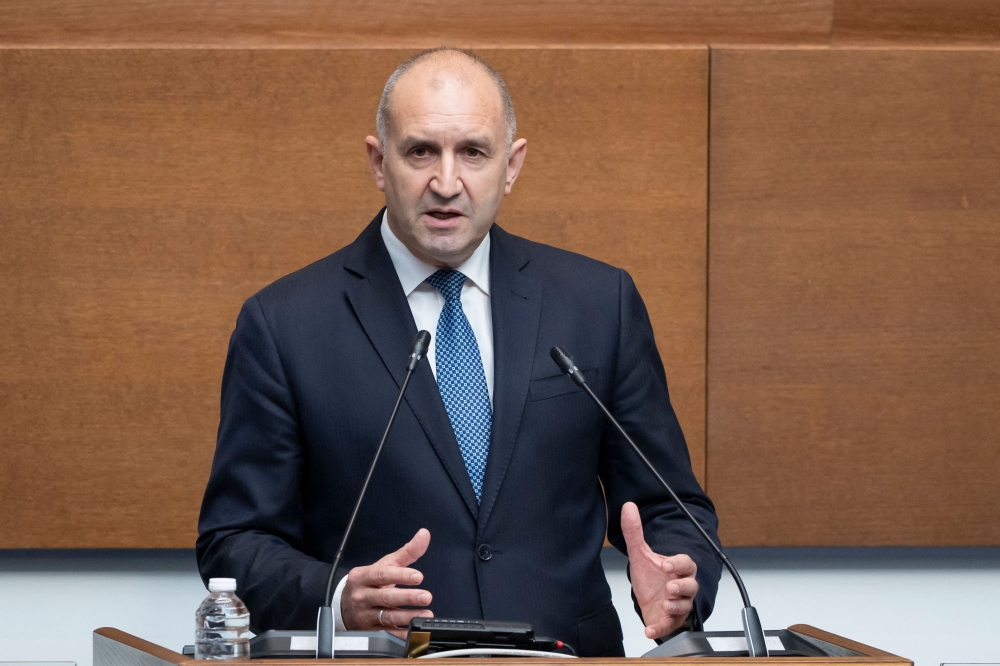
Bulgarian Prime Minister Rumen Radev stated that Bulgaria should not join a "Coalition of the Willing" to provide military support to Ukraine, advocating instead for a diplomatic resolution.
By Euvo Editorial Team
Behind the scenes
Who actually decides this?
- Step 1
European Commission
Proposes
The Commission is the only one that can write a new EU law from scratch. Think of them as the ones drafting the group chat message.
- Step 2
European Parliament
Amends & debates
MEPs you actually voted for read the draft, argue about it, and suggest changes. This is where things get loud.
- Step 3
Council of the EU
Also amends
Ministers from each EU country weigh in for their government. They want changes too, usually different ones than Parliament.
- Step 4
Parliament + Council
Sign off together
They lock themselves in a room (the ‘trilogue’) with the Commission until they agree on one final text. Both have to say yes, or nothing happens.
Bulgaria's Prime Minister, Rumen Radev, has expressed reservations about his country participating in a "Coalition of the Willing" to deliver military assistance to Ukraine. His comments highlight differing perspectives within the EU and NATO on how to best address the ongoing conflict.
Prime Minister Radev, speaking on the matter, emphasized that he believes the solution lies not in prolonged military engagement, but rather in a robust diplomatic approach. This stance could be seen as diverging from the broader consensus among many EU member states and NATO allies, who have largely committed to supplying military aid to Ukraine.
The idea of a "Coalition of the Willing" typically refers to a group of nations that collaborate on a specific military or political objective outside a formal alliance structure, though often with significant overlap. In this context, such a coalition would aim to coordinate and enhance military support for Ukraine against Russia.
Bulgaria has been a member of the European Union since 2007 and NATO since 2004. Its position on providing military aid to Ukraine is a sensitive topic, given its historical ties to Russia and its reliance on Russian energy. The nation's approach to the conflict has been a subject of internal debate.
Many EU member states and NATO partners have provided substantial military, financial, and humanitarian aid to Ukraine since the full-scale invasion began. The collective effort aims to help Ukraine defend itself and push for a diplomatic resolution from a position of strength.
Radev's statement could impact the perception of EU and NATO unity on foreign policy and defense. While nations are sovereign in their decisions, a lack of full alignment can sometimes complicate coordinated international responses to crises.
The prime minister's remarks suggest a preference for de-escalation through dialogue over direct military support as the primary strategy for conflict resolution. This perspective adds to the ongoing discussion among international partners about the most effective path forward for peace in Ukraine.
As the conflict continues, the balance between military aid and diplomatic efforts remains a central point of discussion among global leaders. Different nations may emphasize one approach over the other, influencing the overall international strategy.
Sign in to react, boost, save and comment.
Send it to a friend who'd get it.